
Blog
What is a Hoodie?
You walk into a store looking for a reliable layer, but the racks are cluttered with "activewear," "fleece tops," and "knits." You grab...
Most people buy hoodies based on the cool graphic on the chest. Then, three washes later, the waist ribbing is loose, the hood is misshapen, and the fabric is covered in pills. You just wasted $80 on a glorified rag. It’s frustrating to realize you paid for a brand name rather than a quality garment. I’ve spent a decade reviewing streetwear for various hoodie blogs, and I’ve learned that the secret to a “forever hoodie” lies in the technical specs, not the marketing hype.
If you read professional hoodie blogs, you’ll see the term “GSM” everywhere. It stands for Grams per Square Meter. It’s the standard measure of fabric density. Most fast-fashion hoodies sit around 250-280 GSM. They feel light because they are light.
In my experience testing hundreds of samples, the “sweet spot” for a premium feel is 400 GSM or higher. This weight provides that structured, architectural look that defines modern streetwear. Heavyweight fabric hangs differently; it doesn’t cling to your frame in a way that looks cheap.
Key Takeaway: Always check the product description for GSM. If the brand doesn’t list it, they are likely using a standard, low-cost blank. Aim for 400+ GSM for a true heavyweight feel.
I see people get these two mixed up constantly. The interior of your hoodie determines both comfort and how long it stays looking new.
French Terry: Features loops of thread on the inside. It’s breathable and doesn’t “shed” on your t-shirt.
Brushed Fleece: Those loops are shredded to create a fuzzy, soft interior. It’s warmer but prone to pilling over time.
| Feature | French Terry | Brushed Fleece | 100% Cotton | Poly-Blend |
| Durability | High | Medium | High | Very High |
| Softness | Moderate | Very High | Natural | Synthetic Feel |
| Breathability | Excellent | Low | High | Poor |
| Best For | Layering/Year-round | Winter/Static Wear | High-end Streetwear | Gym/Performance |
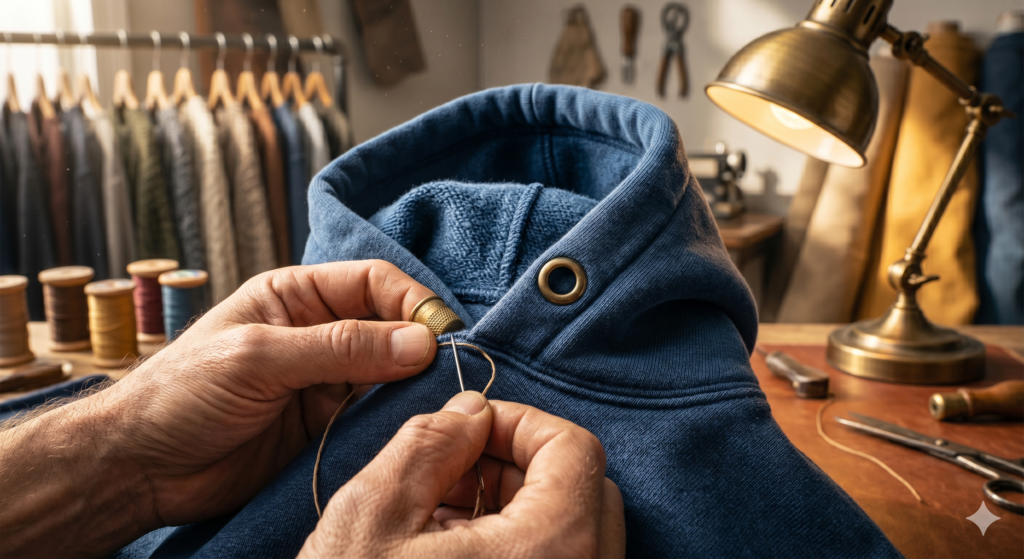
A common mistake I see among new collectors is ignoring the hardware and stitching. I learned this the hard way after a “premium” hoodie’s drawstring eyelet popped off after one week.
First, look at the ribbing. High-quality hoodies use a high percentage of spandex in the cuffs and waistband. This ensures they “snap back” to their original shape. If the waistband looks wavy or loose on the model, it will look like a bell on you within a month.
Second, check for flatlock stitching. Unlike a standard overlock stitch, flatlock seams are flat on both sides. This reduces bulk and prevents chafing. It’s more expensive to produce, which is why you rarely see it on budget-tier items.
Don’t buy five cheap hoodies. Buy one great one. Look for heavy GSM, 100% cotton or high-cotton blends, and robust ribbing. The best hoodie blogs prioritize these technical details over flashy logos every single time. Your wardrobe (and your wallet) will thank you in three years when that hoodie still looks brand new.